colorful tattoo designs MIAMI
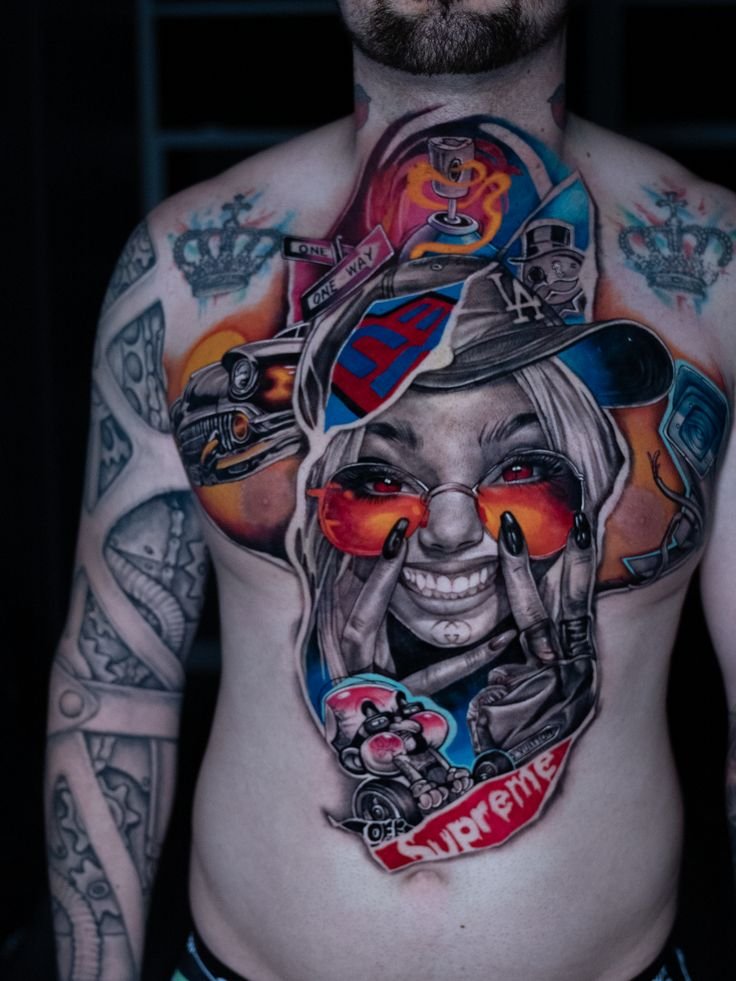
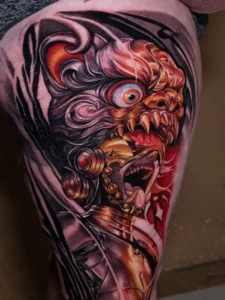
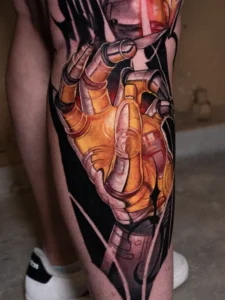
Color tattooing is a vibrant celebration of self-expression. It transforms the skin into a living canvas, using a full spectrum of pigments to bring stories to life. From bold, solid fills to delicate, painterly gradients, color tattoos offer a level of energy and personality that is unmatched.
History and Evolution
While tattooing has been around for millennia, the color revolution truly exploded in the late 19th and early 20th centuries. With the birth of American Traditional (Old School), artists began using a limited palette of primary colors—mostly red, yellow, and green. As ink technology advanced in the 90s and 2000s, the “New School” and “Color Realism” movements emerged, allowing artists to use hundreds of shades to create high-definition, photographic effects and surreal illustrations.
The Science: Color Theory & Pigmentation
Creating a lasting color tattoo is about more than just picking a pretty shade. It requires a deep understanding of Color Theory:
Contrast: To make colors “pop,” we often use black or darker tones as a foundation. Without contrast, color can lose its definition over time.
The Palette: We select pigments based on their opacity and how they interact with your skin’s natural undertone.
Saturation Excellence: The goal is “solid saturation.” This means packing the pigment evenly into the dermis so the color remains bright and uniform once healed, avoiding patchy or faded areas.
Techniques and Inks
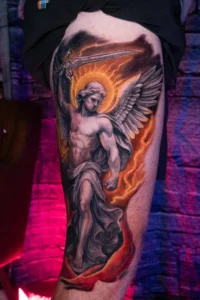
The Technique: It’s all about layering and soft shading. The goal is to create a 3D effect on a 2D surface, mimicking the look of a charcoal drawing or a black-and-white photograph.
The Palette: We do not use “grey” ink from a bottle. Instead, we use a single High-Quality Black Ink diluted into several caps (the “wash”) to achieve smooth transitions from deep shadows to ghostly highlights.
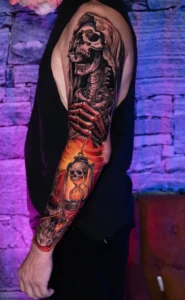
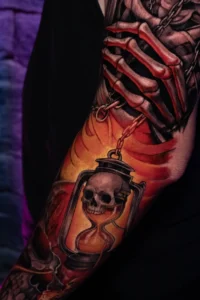
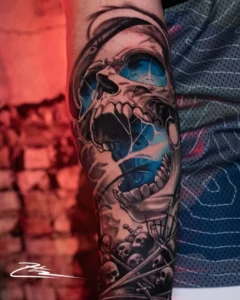
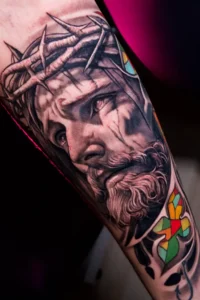
Send us a message
Techniques and Tools
- Layering: Just like an oil painter, we layer colors to create depth, shadows, and highlights. This is what makes a piece look 3D.
- Blending: This technique creates smooth transitions between different hues, such as a sunset gradient or the delicate petals of a flower.
- The Needles:
- Magnums: Used for packing color into large areas and creating soft blends.
- Round Shaders: Ideal for smaller color details and tight corners.
- Liners: Used to create the “fences” that hold the color in place, especially in Neo-traditional styles.
Inclusivity: Color on Every Skin Tone
One of the biggest myths is that color only works on fair skin. Color is for everyone. The key is selecting the right “Color Story.” For deeper skin tones, we focus on rich, highly pigmented jewel tones (like deep reds, royal blues, and emerald greens) that complement the skin’s natural warmth and ensure the design remains visible and striking for years.
Stiven Hernandez

camilo salinas
Juan Pablo
Guest Artist
Santiago Lopera